Sample Rotations
In order to try to explain things and give some examples we can try I thought it might help to show the rotations for a finite subset of the rotation group. We will use the set of rotations of a cube onto itself, this is a permutation group which gives 24 possible rotations as explaned on this page.
In the following table we will need to know what quadrant the results are in,
so I have taken some sample results from Math.atan2
atan2(0.0,0.0)=0.0 (although Math.atan2 returns 0 this is abitary and if both x and y is zero we need to find some other way to get to value)
atan2(0.0,1.0)=0.0
atan2(1.0,1.0)=0.7853981633974483
atan2(1.0,0.0)=1.5707963267948966
atan2(1.0,-1.0)=2.356194490192345
atan2(0.0,-1.0)=3.141592653589793
atan2(-1.0,-1.0)=-2.356194490192345
atan2(-1.0,0.0)=-1.5707963267948966
atan2(-1.0,1.0)=-0.7853981633974483
heading applied first giving 4 possible orientations:

reference orientation
trace = m00 + m11 + m22 + 1 = 4
so use:
- qw= sqrt (1 + m00 + m11 + m22) /2
- qx = (m21 - m12)/( 4 *qw)
- qy = (m02 - m20)/( 4 *qw)
- qz = (m10 - m01)/( 4 *qw)
q = 1 |

rotate by 90 degrees about y axis
trace = m00 + m11 + m22 + 1 = 2
so use:
- qw= sqrt (1 + m00 + m11 + m22) /2
- qx = (m21 - m12)/( 4 *qw)
- qy = (m02 - m20)/( 4 *qw)
- qz = (m10 - m01)/( 4 *qw)
q = 0.7071 + j 0.7071 |

rotate by 180 degrees about y axis
trace = m00 + m11 + m22 + 1 = 0
so this may not be accurate:
- qw= sqrt (1 + m00 + m11 + m22) /2
- qx = (m21 - m12)/( 4 *qw)
- qy = (m02 - m20)/( 4 *qw)
- qz = (m10 - m01)/( 4 *qw)
q = j |

rotate by 270 degrees about y axis
trace = m00 + m11 + m22 + 1 = 2
so use:
- qw= sqrt (1 + m00 + m11 + m22) /2
- qx = (m21 - m12)/( 4 *qw)
- qy = (m02 - m20)/( 4 *qw)
- qz = (m10 - m01)/( 4 *qw)
q = 0.7071 - j 0.7071
(equivilant rotation to:
-0.7071 + j 0.7071) |
Then apply attitude +90 degrees for each of the above: (note: that if we went
on to apply bank to these it would just rotate between these values, the straight
up and streight down orientations are known as singularities because they can
be fully defined without using the bank value)

trace = m00 + m11 + m22 + 1 = 2
so use:
- qw= sqrt (1 + m00 + m11 + m22) /2
- qx = (m21 - m12)/( 4 *qw)
- qy = (m02 - m20)/( 4 *qw)
- qz = (m10 - m01)/( 4 *qw)
q = 0.7071 + k 0.7071
|

trace = m00 + m11 + m22 + 1 = 1
so use:
- qw= sqrt (1 + m00 + m11 + m22) /2
- qx = (m21 - m12)/( 4 *qw)
- qy = (m02 - m20)/( 4 *qw)
- qz = (m10 - m01)/( 4 *qw)
q = 0.5 + i 0.5 + j 0.5 + k 0.5
|

trace = m00 + m11 + m22 + 1 = 0
so this may not be accurate:
- qw= sqrt (1 + m00 + m11 + m22) /2 =0
- qx = (m21 - m12)/( 4 *qw) gives divide by zero
- qy = (m02 - m20)/( 4 *qw)
- qz = (m10 - m01)/( 4 *qw)
q = i 0.7071 +j 0.7071
|

trace = m00 + m11 + m22 + 1 = 1
so use:
- qw= sqrt (1 + m00 + m11 + m22) /2
- qx = (m21 - m12)/( 4 *qw)
- qy = (m02 - m20)/( 4 *qw)
- qz = (m10 - m01)/( 4 *qw)
q = 0.5 - i 0.5 - j 0.5 + k 0.5
|
Or instead apply attitude -90 degrees (also a singularity):

trace = m00 + m11 + m22 + 1 = 2
so use:
- qw= sqrt (1 + m00 + m11 + m22) /2
- qx = (m21 - m12)/( 4 *qw)
- qy = (m02 - m20)/( 4 *qw)
- qz = (m10 - m01)/( 4 *qw)
q = 0.7071 - k 0.7071
(equivilant rotation to:
-0.7071 + k 0.7071) |

trace = m00 + m11 + m22 + 1 = 1
so use:
- qw= sqrt (1 + m00 + m11 + m22) /2
- qx = (m21 - m12)/( 4 *qw)
- qy = (m02 - m20)/( 4 *qw)
- qz = (m10 - m01)/( 4 *qw)
q = 0.5 - i 0.5 + j 0.5 - k 0.5 |

trace = m00 + m11 + m22 + 1 = 0
so this may not be accurate:
- qw= sqrt (1 + m00 + m11 + m22) /2
- qx = (m21 - m12)/( 4 *qw)
- qy = (m02 - m20)/( 4 *qw)
- qz = (m10 - m01)/( 4 *qw)
q = -i 0.7071 + j 0.7071
(equivilant rotation to:
i 0.7071 - j 0.7071) |

trace = m00 + m11 + m22 + 1 = 1
so use:
- qw= sqrt (1 + m00 + m11 + m22) /2
- qx = (m21 - m12)/( 4 *qw)
- qy = (m02 - m20)/( 4 *qw)
- qz = (m10 - m01)/( 4 *qw)
q = 0.5 + i 0.5 - j 0.5 - k 0.5 |
Normally we dont go beond attitude + or - 90 degrees because thes are singularities,
instead apply bank +90 degrees:
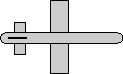
trace = m00 + m11 + m22 + 1 = 2
so use:
- qw= sqrt (1 + m00 + m11 + m22) /2
- qx = (m21 - m12)/( 4 *qw)
- qy = (m02 - m20)/( 4 *qw)
- qz = (m10 - m01)/( 4 *qw)
q = 0.7071 + i 0.7071
|

trace = m00 + m11 + m22 + 1 = 1
so use:
- qw= sqrt (1 + m00 + m11 + m22) /2
- qx = (m21 - m12)/( 4 *qw)
- qy = (m02 - m20)/( 4 *qw)
- qz = (m10 - m01)/( 4 *qw)
q = 0.5 + i 0.5 + j 0.5 - k 0.5
|

trace = m00 + m11 + m22 + 1 = 0
so this may not be accurate:
- qw= sqrt (1 + m00 + m11 + m22) /2
- qx = (m21 - m12)/( 4 *qw)
- qy = (m02 - m20)/( 4 *qw)
- qz = (m10 - m01)/( 4 *qw)
q = j 0.7071 - k 0.7071
|

trace = m00 + m11 + m22 + 1 = 1
so use:
- qw= sqrt (1 + m00 + m11 + m22) /2
- qx = (m21 - m12)/( 4 *qw)
- qy = (m02 - m20)/( 4 *qw)
- qz = (m10 - m01)/( 4 *qw)
q = 0.5 + i 0.5 - j 0.5 + k 0.5
|
Apply bank +180 degrees:

trace = m00 + m11 + m22 + 1 = 0
so this may not be accurate:
- qw= sqrt (1 + m00 + m11 + m22) /2
- qx = (m21 - m12)/( 4 *qw)
- qy = (m02 - m20)/( 4 *qw)
- qz = (m10 - m01)/( 4 *qw)
q = i |

trace = m00 + m11 + m22 + 1 = 0
so this may not be accurate:
- qw= sqrt (1 + m00 + m11 + m22) /2
- qx = (m21 - m12)/( 4 *qw)
- qy = (m02 - m20)/( 4 *qw)
- qz = (m10 - m01)/( 4 *qw)
q = i 0.7071 - k 0.7071
|

trace = m00 + m11 + m22 + 1 = 0
so this may not be accurate:
- qw= sqrt (1 + m00 + m11 + m22) /2
- qx = (m21 - m12)/( 4 *qw)
- qy = (m02 - m20)/( 4 *qw)
- qz = (m10 - m01)/( 4 *qw)
q = k |

trace = m00 + m11 + m22 + 1 = 0
so this may not be accurate:
- qw= sqrt (1 + m00 + m11 + m22) /2
- qx = (m21 - m12)/( 4 *qw)
- qy = (m02 - m20)/( 4 *qw)
- qz = (m10 - m01)/( 4 *qw)
q = i 0.7071 + k 0.7071
|
Apply bank -90 degrees:

trace = m00 + m11 + m22 + 1 = 2
so use:
- qw= sqrt (1 + m00 + m11 + m22) /2
- qx = (m21 - m12)/( 4 *qw)
- qy = (m02 - m20)/( 4 *qw)
- qz = (m10 - m01)/( 4 *qw)
q = 0.7071 - i 0.7071
(equivilant rotation to:
-0.7071 + i 0.7071)
|

trace = m00 + m11 + m22 + 1 = 1
so use:
- qw= sqrt (1 + m00 + m11 + m22) /2
- qx = (m21 - m12)/( 4 *qw)
- qy = (m02 - m20)/( 4 *qw)
- qz = (m10 - m01)/( 4 *qw)
q = 0.5 - i 0.5 + j 0.5 + k 0.5
|
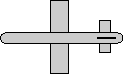
trace = m00 + m11 + m22 + 1 = 0
so this may not be accurate:
- qw= sqrt (1 + m00 + m11 + m22) /2
- qx = (m21 - m12)/( 4 *qw)
- qy = (m02 - m20)/( 4 *qw)
- qz = (m10 - m01)/( 4 *qw)
q = j 0.7071 + k 0.7071
|

trace = m00 + m11 + m22 + 1 = 1
so use:
- qw= sqrt (1 + m00 + m11 + m22) /2
- qx = (m21 - m12)/( 4 *qw)
- qy = (m02 - m20)/( 4 *qw)
- qz = (m10 - m01)/( 4 *qw)
q = 0.5 - i 0.5 - j 0.5 - k 0.5
|
This site may have errors. Don't use for critical systems.